
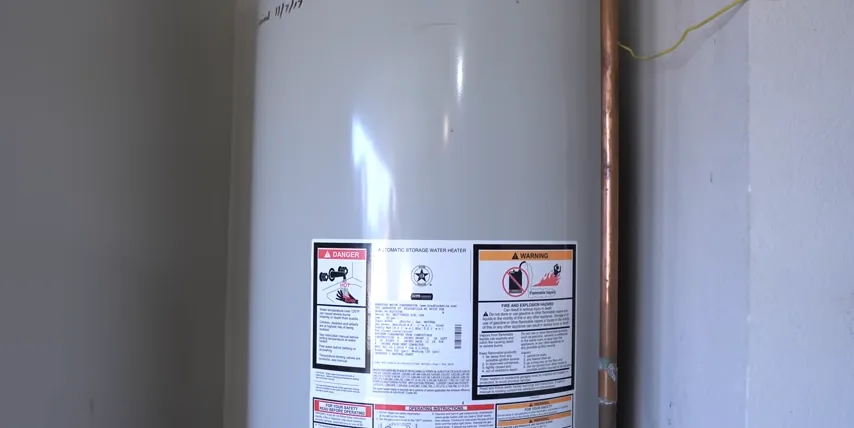
What is water heater replacement?
Water heater replacement means removing an existing system and installing another unit selected for the property’s hot-water demand, fuel or electrical supply, space, venting where needed, access, and local requirements.
For water heater replacement in Boca Raton, FL, the useful starting point is an accurate description of the problem and the property. Do not assume a component has failed based on one symptom. A qualified independent provider can inspect the equipment and explain which options fit the diagnosis.
Warning signs to take seriously
- The tank shell leaks, rust is extensive, or the base seam is wet.
- Breakdowns are recurring and repair costs are accumulating.
- The unit struggles to meet demand or hot water recovery has declined.
- The equipment no longer fits the property’s capacity or energy priorities.
A tank that leaks through its body, water spreading near electrical equipment, or a gas odor changes the priority from shopping to safety. Do not patch a corroded tank or bypass a relief device. Make the area safe and request appropriate help.
What to do before arranging service
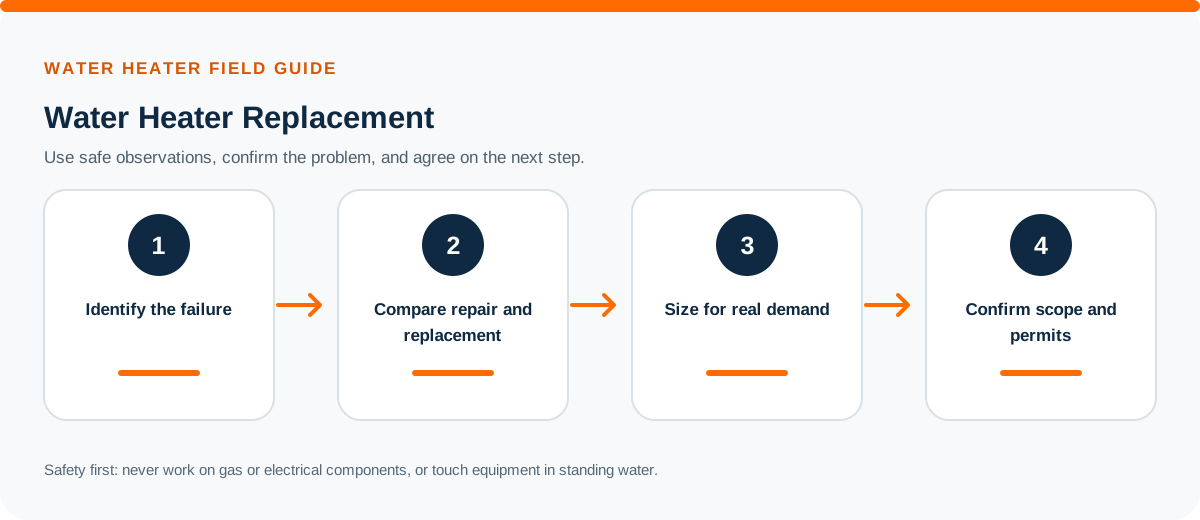
Use these steps before arranging water heater replacement; they collect safe observations only. Stop if the situation involves gas odor, burning, active flooding, or water near electrical components.
- Ask for the failed component and the evidence supporting the diagnosis.
- Compare a repair estimate with a full replacement estimate, including required installation changes.
- Choose capacity and fuel based on actual simultaneous demand, not only the old tank’s label.
- Confirm permits, removal/disposal, startup tests, warranty conditions, and the final written price.
What a useful diagnosis should cover
For water heater replacement, a clear assessment explains the source of the problem, the reason for the recommendation, and what is included in the work. Depending on the equipment and symptom, an independent provider may need to check:
- Tank shell condition, age, corrosion, and repair history.
- Parts and labor for the immediate repair compared with the installed replacement scope.
- Storage capacity or tankless flow demand, fuel availability, electrical capacity, and location.
- Permits, access, drain pan or drain route, expansion control, and disposal.
Ask for the finding in plain language. If replacement is recommended, ask what evidence rules out a repair and whether the quote includes removal, installation changes, permits, startup testing, and disposal.
A four-step guide for this service
Common situations and the next question to ask
| Situation | What it may mean | Useful question |
|---|---|---|
| Isolated repairable part; tank is sound | Repair may be reasonable if the diagnosis is clear and the total cost is proportionate. | Ask what failed, why it failed, and whether related wear was checked. |
| Repeated faults or declining performance | Compare repair with replacement using total expected ownership and reliability. | Request both options in writing where practical. |
| Tank shell leak or severe corrosion | Replacement is generally the safe path because the vessel itself cannot be patched. | Ask about water containment, removal, new equipment sizing, and permits. |
Pros and cons to weigh before approving work
Potential benefits
- Replacement can address tank corrosion and repeated failure rather than treating symptoms one at a time.
- A new unit creates an opportunity to correct sizing or installation issues.
Limitations and trade-offs
- The installed cost is higher than a small component repair and may involve code-related upgrades.
- Changing fuel type or system design can add infrastructure work and require more planning.
For water heater replacement, these are general considerations rather than a promise that a particular repair will be possible or that replacement will cost less over time. Ask for a diagnosis and written scope.
What to expect when you call
- Describe the symptom, property address or ZIP code, and the equipment type if known.
- Confirm that an independent provider can cover the address and handle the type of job.
- Ask about diagnostic or dispatch charges, current availability, and any after-hours fee.
- Before approving work, verify the provider’s identity and applicable credentials, then review the written scope, permit responsibility, exclusions, and warranty terms.
Compare the complete installed replacement scope
A replacement estimate should identify the proposed unit and installation work, not just a tank capacity or appliance price. Ask for the make and model, dimensions, fuel type, removal of the old unit, connection changes, startup checks and the parts or labor warranty terms.
Clarify whether permits, inspections and necessary installation upgrades are included or listed separately. A like-for-like replacement and a conversion to a different system may have very different scopes. Confirm which authority applies to the property rather than assuming the postal city settles the question.
If repair remains practical, ask the provider to compare it with replacement using the confirmed fault, vessel condition, available warranty and past service history. There is no universal percentage rule that makes the same answer correct for every heater. For age-related planning, see the water heater lifespan guide and use the actual unit’s condition in the decision.
Frequently asked questions
How do I know when to replace instead of repair?
A leaking tank shell, extensive corrosion, repeated failures, poor performance, and the age/condition of the unit are important factors. Ask for a diagnosis and compare written options.
Is a newer water heater always cheaper to operate?
Not always. Operating cost depends on efficiency, fuel prices, usage, incoming water temperature, and maintenance. Compare equipment data and your usage pattern.
Can I change from tank to tankless?
Possibly, but the home’s demand, gas or electrical supply, venting, space, and permit requirements must be assessed.
Who obtains the permit?
Ask the actual contractor to state in writing who handles permits and inspections. Verify requirements with the authority responsible for the exact property address.
What should I ask about water heater replacement in Boca Raton, FL?
Ask what diagnosis is proposed, what the diagnostic or dispatch fee is, whether the provider covers your address and equipment, and what is included in the written scope.
Does this website perform water heater replacement?
No. This page explains water heater replacement as a referral category. Independent providers perform any plumbing work; verify the actual provider and applicable credentials before hiring.
Summary: the right next step
A sound replacement decision comes from a diagnosis and a like-for-like comparison of repair and installation costs. If the tank shell itself has failed, focus on safe replacement planning rather than a temporary patch.
Before approving water heater replacement in Boca Raton, FL, compare the diagnosis, total scope, permit responsibility, and warranty terms in writing.