
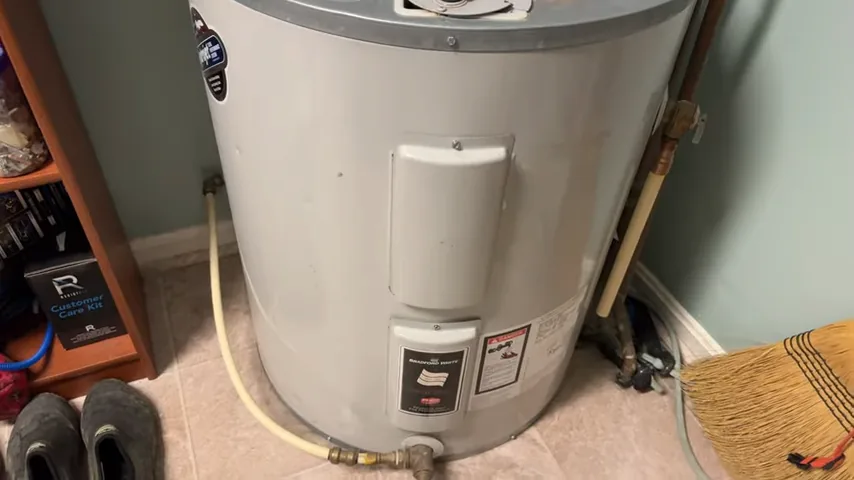
What is water heater installation?
Water heater installation includes selecting and sizing the system, preparing the location, making water and fuel or electrical connections, addressing venting and drainage where required, starting the unit safely, checking for leaks, and documenting permits and warranty terms.
For water heater installation in Boca Raton, FL, the useful starting point is an accurate description of the problem and the property. Do not assume a component has failed based on one symptom. A qualified independent provider can inspect the equipment and explain which options fit the diagnosis.
Warning signs to take seriously
- A remodel or new property requires a correctly sized water-heating system.
- The existing unit is being replaced and the connection layout needs review.
- Hot-water demand has changed because of additional fixtures or occupants.
- The installation location is tight, elevated, or shared with other building systems.
If installation is needed because the current tank is actively leaking or there is a gas or electrical hazard, address the immediate safety issue first. Do not move, disconnect, or energize equipment while water is present near electrical components.
What to do before arranging service
Use these steps before arranging water heater installation; they collect safe observations only. Stop if the situation involves gas odor, burning, active flooding, or water near electrical components.
- List the number of people, fixtures, and likely simultaneous hot-water uses.
- Record the current fuel type, unit location, measurements, access route, and any association restrictions.
- Ask for a proposal that explains capacity, efficiency, connection changes, venting/electrical needs, and permit scope.
- Before sign-off, confirm leak checks, operating settings, safety devices, cleanup, documentation, and the warranty process.
What a useful diagnosis should cover
For water heater installation, a clear assessment explains the source of the problem, the reason for the recommendation, and what is included in the work. Depending on the equipment and symptom, an independent provider may need to check:
- Sizing against peak demand and expected recovery, not just tank volume.
- Safe water, gas, electrical, venting, combustion-air, and condensate arrangements as applicable.
- Clearances, seismic/restraint or support requirements where applicable, drain pan and drain routing.
- Permit and inspection responsibilities, equipment documentation, and post-installation testing.
Ask for the finding in plain language. If replacement is recommended, ask what evidence rules out a repair and whether the quote includes removal, installation changes, permits, startup testing, and disposal.
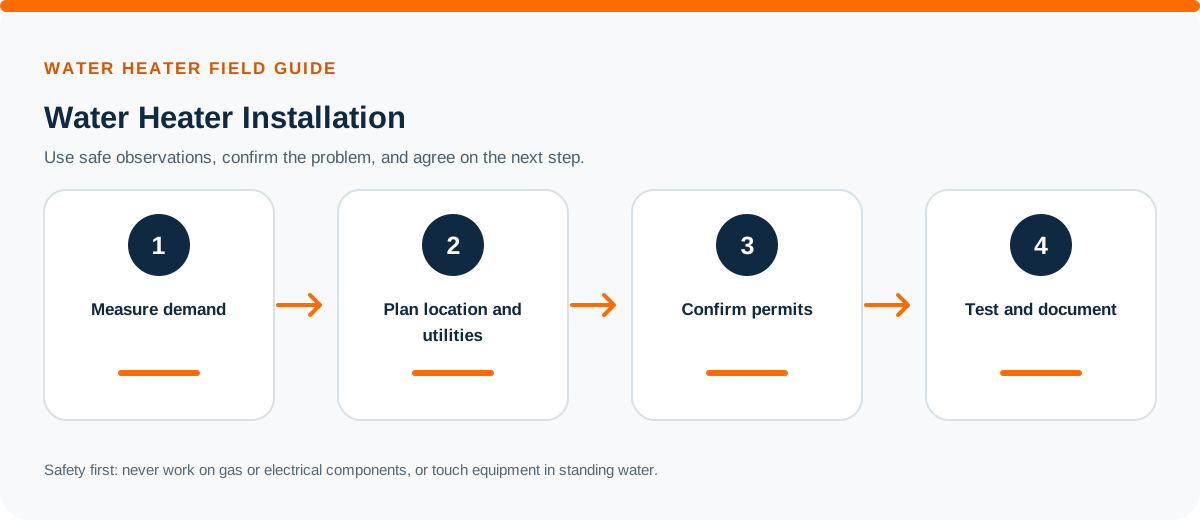
A four-step guide for this service
Common situations and the next question to ask
| Situation | What it may mean | Useful question |
|---|---|---|
| Like-for-like replacement | May be simpler if the existing location and utilities are suitable. | Still confirm condition, clearances, connections, and current permit requirements. |
| New fuel type or tankless design | May require new electrical, gas, venting, or condensate work. | Ask for a site-specific scope before comparing bids. |
| Condo or restricted-access property | Delivery, elevator, shutoff coordination, and work windows may affect the plan. | Confirm building approval, access, protection of common areas, and who coordinates with management. |
Pros and cons to weigh before approving work
Potential benefits
- A properly sized and installed system supports predictable hot-water availability.
- A planned installation allows the owner to compare capacity, efficiency, and maintenance needs.
Limitations and trade-offs
- A lower equipment price may not include utility upgrades, permit work, disposal, or needed accessories.
- Poor sizing or rushed commissioning can lead to disappointing performance or repeat problems.
For water heater installation, these are general considerations rather than a promise that a particular repair will be possible or that replacement will cost less over time. Ask for a diagnosis and written scope.
What to expect when you call
- Describe the symptom, property address or ZIP code, and the equipment type if known.
- Confirm that an independent provider can cover the address and handle the type of job.
- Ask about diagnostic or dispatch charges, current availability, and any after-hours fee.
- Before approving work, verify the provider’s identity and applicable credentials, then review the written scope, permit responsibility, exclusions, and warranty terms.
Select the system before agreeing to the installation scope
Begin with how the property uses hot water and the connections available at the intended location. Ask the company to explain the selected capacity or output, service clearances, access for maintenance and any utility or venting changes on which the recommendation depends.
For a storage system, the tank’s volume is only part of the performance discussion. For tankless equipment, simultaneous demand and the required temperature rise matter. Changing fuel type or choosing a different technology can introduce work beyond disconnecting one appliance and fitting another.
Request an itemized installation proposal covering equipment, delivery, connections, required approvals, testing and removal where relevant. Ask what happens if the assessment reveals work not included in the original scope. Compare the gas and electric considerations and tank versus tankless trade-offs before making the final selection with the provider.
Frequently asked questions
How is water heater size selected?
Sizing depends on peak simultaneous demand, recovery or flow capacity, fuel/utility limits, and the property layout.
Can I install it in the same place as the old heater?
Sometimes. The location, clearances, drainage, venting, electrical/gas supply, and access must meet the proposed unit’s requirements.
What should the installer test before leaving?
The system should be started according to its instructions, checked for leaks, and verified for normal operation and safety. Ask for the checklist and any inspection records.
Do I need a permit?
Requirements depend on property jurisdiction and scope. The City of Boca Raton publishes water-heater changeout guidance for work within city jurisdiction; verify the current rules for the exact address.
What should I ask about water heater installation in Boca Raton, FL?
Ask what diagnosis is proposed, what the diagnostic or dispatch fee is, whether the provider covers your address and equipment, and what is included in the written scope.
Does this website perform water heater installation?
No. This page explains water heater installation as a referral category. Independent providers perform any plumbing work; verify the actual provider and applicable credentials before hiring.
Summary: the right next step
Good installation begins with the property, demand, and utilities. Compare complete written scopes—not equipment prices alone—and confirm the required inspections and startup checks.
Before approving water heater installation in Boca Raton, FL, compare the diagnosis, total scope, permit responsibility, and warranty terms in writing.